“To make a great film you need three things:
the script, the script and the script.”
⁓ Alfred Hitchcock
Or, put another way:
Prepare
Prepare
Prepare

What Is Creativity?
This is one of the great conundrums of life, as it draws on the very essence of being human. Many great thinkers have dedicated much time to exploring this question, delving into concepts such as God, the Universal Subconscious, human psychology, problem solving, the contrasts with logic and reason, individual expressions of joie de vivre, communication, ritual, mythology, evolutionary progress, the Spirit in Man, a trinitarian-relationship between artist, performance and the audience, plus history and future predictions.
One inspirational book, attempting to pour illumination on all this, is The Face of Glory by William Anderson (excerpt below). Undoubtedly, there are many other sources available to you that make an effort to describe the phenomenon.
For the purposes of describing Creativity in relation to a corporate video production service, may we suggest here a relatively concise summary that comprises two aspects: workflows & processes, and the ‘lightbulb’ moment?
As with, say, a student learning to become a graphic designer, a professional videographer must learn the filmmaking process. This covers broadly the Creative Brief & Budgeting, Pre-production, Production, Post-production, Delivery – a further summary of each stage being provided below. By these we structure our services, providing our clients with ‘markers in time’ with which your video project’s progress may be charted.
And yet before all this comes that ‘lightbulb’ moment; this entails research leading to the all-important flash of inspiration. We’ve come to know you (and you, us), we’ve found out about your organisation and what message you’re looking to put out to your customers, we’ve formulated the Creative Brief, and somehow, at some point during all this occurring, up bubbles an image in the mind, or a turn of phrase, a feeling, a sound – and this is our hook, our essential approach upon which all else hangs.
These moments can be found in all situations, if you know how to view things. It is a skill that can be learned with an opening up to imagination, and it’s the wonderful part of our job and why we love what we do.
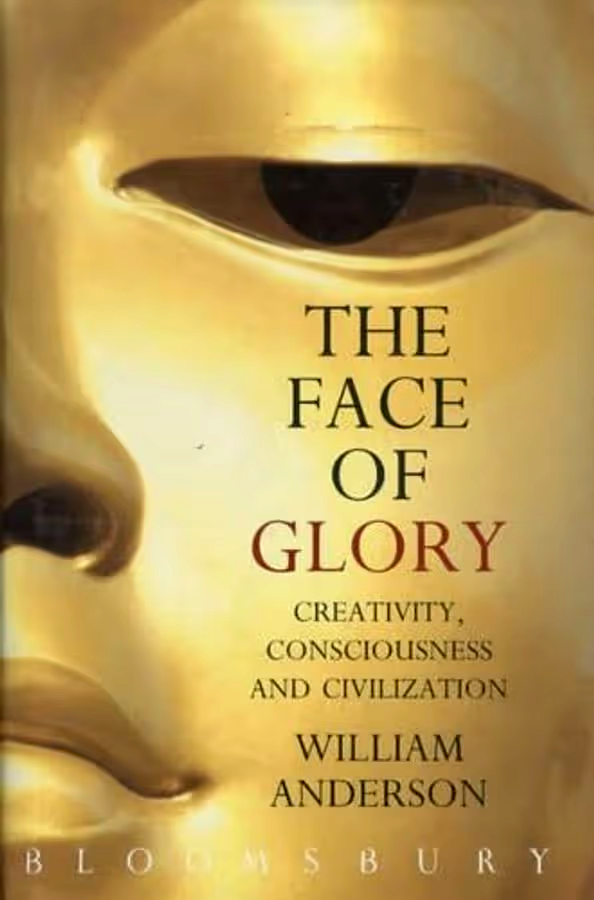
Excerpt (p.125)
We are so accustomed through the influence of psychoanalytic theories to think of creativity as being caused by the unconscious or unconscious workings of the mind that we are blinded to what is in fact in the experience of all of us, the moment of knowing and all that implies. The moment of knowing, by definition, is a conscious experience. We would not know unless we were conscious of knowing. In that moment we are freed from the unconscious when it is the prison of ignorance.
Here I turn the accepted notions upside down by stating this: Conscious experience sets the creative process in motion. By this I mean that inspiration, insight and intuition result from the knowing or conscious experience. Furthermore, the synthesis of different elements of past experience which are brought together in a moment of consciousness is caused in the moment of knowing, not by the incubating or preparatory unconscious stages. They are the preparation of the various ingredients of the dish, not the making of the dish itself.
What are waiting in the memory or unconscious for synthesis are the traces of earlier moments of conscious experience, the striking visual impressions that will make the images of the poem to be or the questions aroused by earlier experimental work that will feed the crucial observation. The unconscious is made up of dormant consciousness. We know most about those unconscious stages through dreams and, for those of us who experience them, hypnagogic images.
Another characteristic of the moment of knowing is that it brings the dream levels more clearly into awareness and in fact joins them to the awareness of the waking state, and the unity through which new conceptions and images arise is owed to the marriage of the waking and dreaming states but with an efficiency and power of co-ordination far beyond the sum of possibilities of the conjoined states. Because our ordinary state of awareness works so slowly, it is difficult for the mind at this level to accept the speed at which the creative moment carries out its syntheses.
We are also accustomed to think of ourselves as living in a four-dimensional continuum of space-time. It is linear and inexorably sequential. We cannot step in the same river twice, according to this habit of thought. That habit of thought vanishes, however, before the experience of knowing, the moment when the future is changed almost, it seems, by the future itself because the possibilities of the future are opened up to us in a wholly new way.